

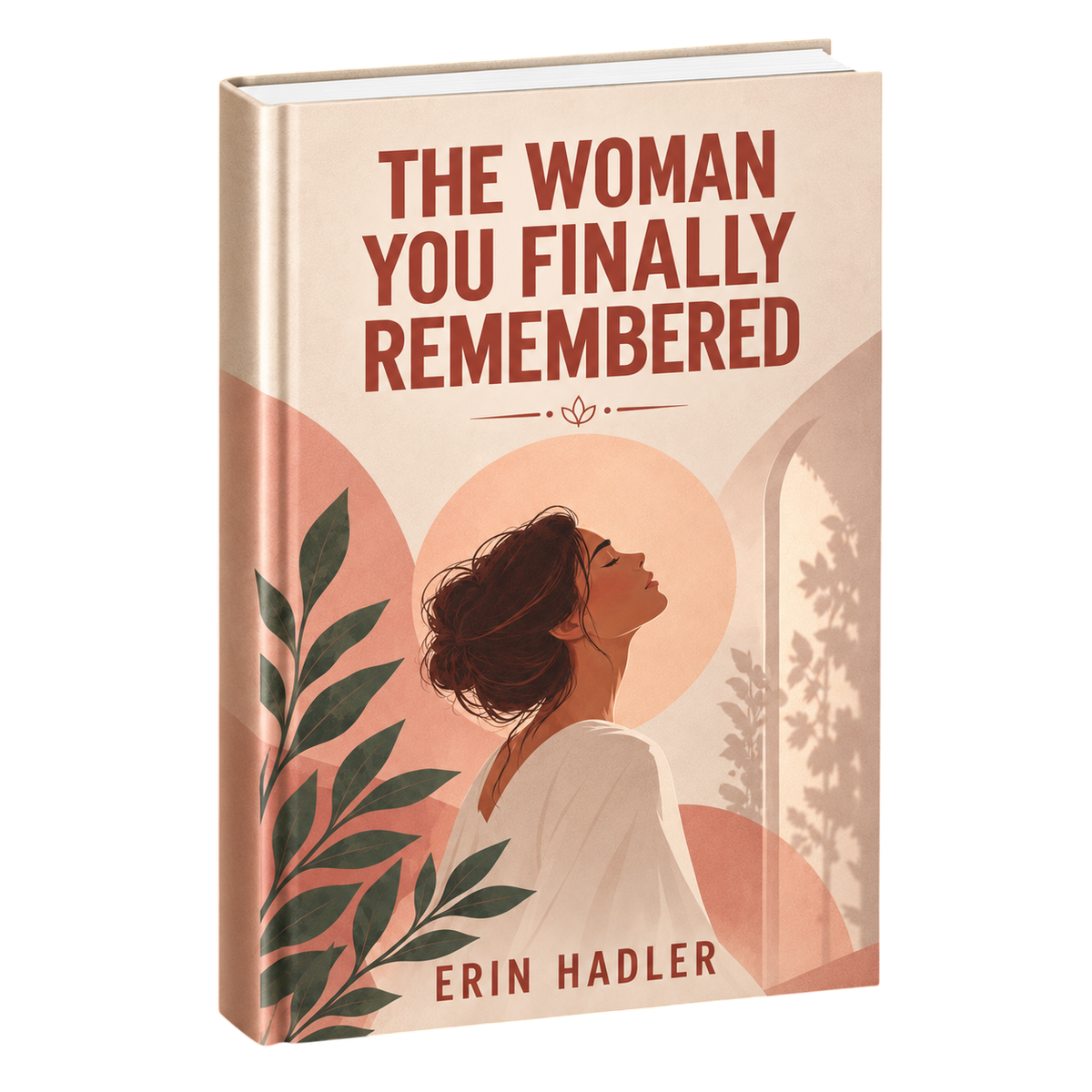
The Woman You Finally Remembered
The Woman You Finally Remembered
✔ Reconnect with yourself
✔ Prioritize yourself without guilt
✔ Stop losing yourself in others
✔ Build healthier boundaries

The Woman You Finally Remembered Audiobook

The Woman You Finally Remembered Part II
-

I've spent years taking care of everyone around me. This book reminded me that I deserve that same care too.
-

Such a refreshing read. No pressure to become a new person, just encouragement to reconnect with who you already are.
-

Reading this felt like having a conversation with someone who genuinely understands what you're going through.


You Were Always Still There
It can be easy to lose sight of yourself when you spend so much time being who everyone else needs. What begins as being helpful, understanding, or dependable can slowly become a habit of putting your own needs aside. Over time, saying yes feels easier than saying no, keeping the peace feels safer than speaking honestly, and your own wants become harder to recognize. Finding your way back begins with noticing those patterns and giving yourself permission to matter again.
Maybe it looked like...
Agreeing before you had time to think.
Staying quiet because it wasn't worth the argument.
Saying "I don't mind" when you actually did.
Feeling guilty for needing time to yourself.
Knowing what everyone else wanted before asking what you wanted.
None of these moments seemed big enough to change who you were. But repeated often enough, they changed how much space you allowed yourself to take up.
The Things You Stopped Noticing
You stopped noticing when you were tired.
You stopped noticing what you wanted.
You stopped noticing what bothered you.
You stopped noticing how often you said yes.
The Woman You Finally Remembered is about learning to notice yourself again.

Is This You?
If you're always the one everyone counts on, the one who remembers the little things, solves the problems, checks in first, and somehow keeps everything together, but can't remember the last time you truly felt like yourself, this book was written for you. The Woman You Finally Remembered by Erin Hadler isn't about becoming someone new. It's about rediscovering the parts of yourself that quietly disappeared beneath responsibilities, expectations, and years of becoming who everyone else needed you to be.
Loved by Readers


From Disconnected to Grounded
Before, your days are shaped around what everyone else needs from you. You agree when you'd rather say no. You keep things running, avoid disappointing people, and carry responsibilities that leave little room to remember what you actually want.
After, you start recognizing the parts of yourself you've been leaving behind. You make decisions with your own needs in mind, set boundaries without explaining yourself endlessly, and reconnect with the things that once felt like you. Not because your responsibilities disappear, but because you finally start remembering yourself within them.
Frequently Asked Questions
Who is this book for?
Who is this book for?
This book is for women who have spent years being dependable, accommodating, and available to everyone around them, but somewhere along the way began feeling disconnected from themselves and what they actually want.
What is the book about?
What is the book about?
It explores how people-pleasing, self-silencing, guilt, expectations, and constantly putting others first can gradually make your own needs and identity harder to recognize. More importantly, it looks at how you can begin finding your way back.
Is this mainly a book about people-pleasing?
Is this mainly a book about people-pleasing?
People-pleasing is part of it, but the book goes much deeper. It explores the patterns underneath it, including why you may feel responsible for other people's feelings, struggle to set boundaries, ignore your own needs, or feel guilty when you finally choose yourself.
What if my life looks good from the outside?
What if my life looks good from the outside?
That's actually one of the experiences the book speaks to. You can have responsibilities, relationships, accomplishments, and a life that appears perfectly fine while still feeling that somewhere along the way, you've become distant from yourself.
What makes this different from a typical self-help book?
What makes this different from a typical self-help book?
Rather than telling you to simply "choose yourself" or "set better boundaries," it focuses on understanding how you became disconnected from yourself in the first place, why those patterns can feel so natural, and how to begin changing them without pretending years of conditioning disappear overnight.
Will this book help if I struggle to say no?
Will this book help if I struggle to say no?
Yes. The book looks at why saying no can feel uncomfortable, selfish, or risky, especially if you're used to being the reliable one. It also explores how to start setting limits without feeling like you're suddenly becoming cold or difficult.
What if I don’t even know what I want anymore?
What if I don’t even know what I want anymore?
That feeling is part of what the book addresses. When you've spent a long time focusing on other people's expectations and needs, your own preferences can become harder to hear. The goal is to start noticing them again, gradually.
Is this book only about relationships?
Is this book only about relationships?
No. Relationships are part of it, but the same patterns can show up in family life, friendships, work, responsibilities, decision-making, and even the way you use your own time.
What if I’m already aware that I people-please?
What if I’m already aware that I people-please?
Awareness is only the beginning. The book goes further into why those habits can be so persistent, what keeps them in place, and how to begin responding differently in everyday situations.
Will this book tell me to cut people out of my life?
Will this book tell me to cut people out of my life?
No. The focus is not on dramatic exits or blaming everyone around you. It's about becoming more aware of your patterns, making more intentional choices, and learning where your own boundaries belong.

Meet Erin
A Note from the Woman Behind the Book
I didn't write this book because I had everything figured out. I wrote it because for a long time, I didn't.
I spent years becoming who everyone else needed, being dependable, capable, and always there. So good at keeping everything together that I rarely stopped to ask when I'd started losing touch with who I was.
This book is the conversation I wish I'd had then. It doesn't ask you to change everything or become someone new. Just to reconnect with the woman you've slowly forgotten.
If you're reading this, part of you probably knows she's still there. Listen to it.
— Erin